
Managing Perfectionism on The Court

Welcome to session number twenty two of The Tennis Psychology Podcast. Dr. Patrick Cohn at Sports Psychology for Tennis, is a mental game of tennis expert and helps tournament players, tennis coaches and parents improve confidence, focus, and composure using sports psychology strategies.
In this week’s tennis psychology session, you’ll learn:
How to manage perfectionism on the court. Many tennis players have sound fundaments, but underperform in matches. They perform tenatively, try to avoid mistakes and become frustrated with themselves. Dr. Cohn teaches you the top mental strategies to manage your perfectionism on the court.
*Download a free tennis psychology report to improve your tennis mindset between points.
Improve Your Mental Toughness for Tennis Quickly with Dr. Cohn’s new Tennis Confidence Audio Program
*Subscribe to The Tennis Psychology Podcast at iTunes!
Related Tennis Psychology Articles
- How to Cope with Perfectionism on Court
- What’s The Challenge With Perfectionism?
- How Perfectionism Hurts Your Mindset for Tennis
- Download our a FREE Tennis Psychology Report
*Subscribe to The Tennis Psychology Podcast on iTunes
*Subscribe to The Tennis Psychology Podcast on Spotify
Improve Your Mental Game for Tennis
Tennis Confidence 2.0
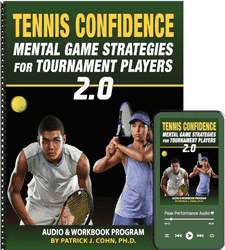
“Tennis Confidence: Mental Game Strategies for Tournament Players” is an audio and workbook program to help tennis players, coaches, and instructors improve the mental game of tennis is just 10 easy to learn sessions. Tennis Confidence: Mental Game Strategies for Tournament Players Audio and Workbook program is ideal for any junior, collegiate, and tour professional player. Tennis coaches and instructors would also be wise to teach the strategies “Tennis Confidence.”
Tennis Confidence is a complete mental training program developed Peak Performance Sports. You learn the same strategies Dr. Cohn teaches his tennis players to help them improve mental toughness and consistency – from managing unrealistic expectations to coping with perfectionism.
Read more about Tennis Confidence Program>>

Dr. Patrick Cohn is a tennis psychology expert with Peak Performance Sportss, LLC. Learn cutting edge mental strategies based on 35+ years of experience in mental performance coaching with professional to junior competitive tennis players. He is the author of The Mental Edge for Tennis 2.0 audio and workbook program.
Although you have brought this topic up time and time again, this does not make it any less important or less interesting.
Great technique does not guarantee a great player, the focus on technique has probably been pushed so much because that’s mainly the focus of tennis lessons.
Tennis instructors mainly make most of their money on teaching technique. Many players feel that since their parent’s spent so much money on teaching them strokes that they should be a great player. That is not always the case.
The three other foundations of being a great player is:
Fitness
Mental toughness/strategy
Practice (repetitions)
Most of the time with district level tournament players they have all have their own technique and repetitions. The only real way to get ahead in that zone is to play much more and have a purpose. Based on the player’s ambitions and life there is usaully a limit to the amount of practice they can get.
Because of that the largest distinguishing factor that I have found with that competitive level is fitness and mental skill. The fitter, mentally stronger player will win most of the time when there is not a huge difference between skill level.(based on practice/technique/skills).
Thanks for helping all of us out for (the often overlooked) mental side of the game.
Nick:
Thanks for the input. I agree with your totally on the lessons on technique. It’s the most controllable type of “training” parents can offer kids.
Patrick Cohn