

What Happens When Tennis Players Choke?
What does it mean to choke in tennis?
The term “choke” comes from the concept that you feel like you can’t breathe, or someone is strangling you, when under pressure; a lack of oxygen. But choking has a wider meaning in sports…
Choking is when an tennis player, who is talented and motivated to achieve their goals, suffers from a decrease in physical performance due to mental stress or worry.
Fear of failure is a big reason why tennis players choke in competition. They worry too much about losing and what it means to them.
But what really happens to a tennis player when they choke?
The body’s nervous system recognizes choking as sense of internal threat; it causes the body to go into fight or flight mode.
Fight or flight is the body’s physiological response to fear or anxiety that prepares an athlete’s body for drastic physical action.
Although fight or flight is meant to keep people safe from physical harm, when the threat is mental, the fight or flight response hurts an athlete’s performance rather than help.
In most choking cases, tennis players experience physical changes, such as:
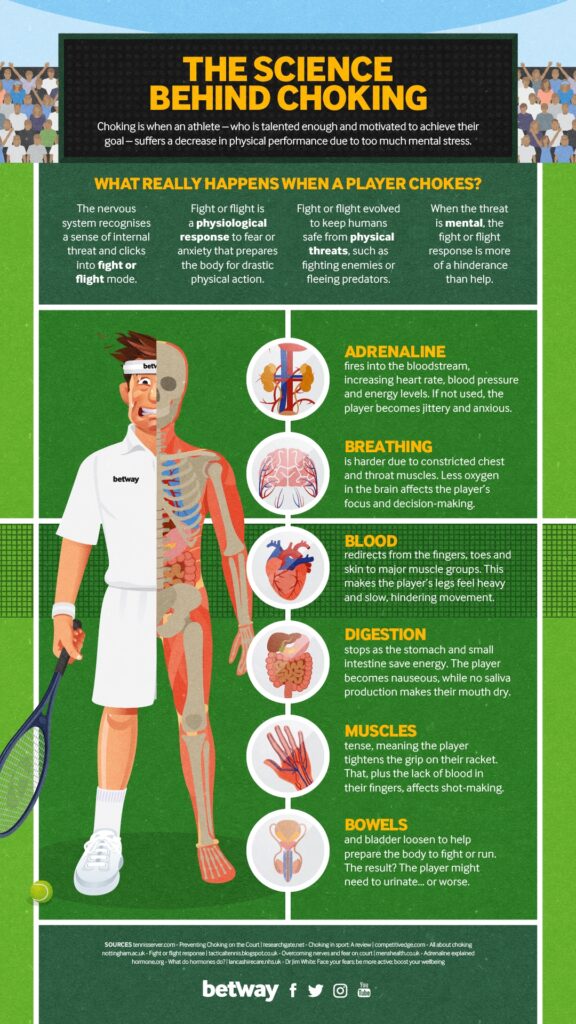
Adrenaline
The adrenaline athletes feel, if not used, causes them to become jittery and anxious.
Breathing
When breathing becomes harder, athletes receive less oxygen to the brain
Blood
The athletes’ blood redirects from the fingers, toes and skin to major muscle groups. When this happens, it hinders their movement by making legs feel heavy and slow.
Digestion
Athletes become nauseous and experience dry mouth due to lack of saliva.
Muscles
Athletes become tense and tighten up. That, along with the lack of blood flow in the fingers, affects their ability to complete their plays.
Bowels
To help prepare the body for fight or flight, the bowels and bladder loosen. This may cause the athlete to feel the need to urinate… or worse…
When choking, tennis players will change their game and often perform more tentatively. They will push the ball or short-stroke their strokes unable to swing with freedom.
Some tennis players may feel more relaxed or comfortable in their practice routines because they don’t feel the anxiety and pressure that comes with game time.
The first step to overcome choking in tennis to understand what you fear about playing, such as:
- Fear of embarrassment
- Fear of letting down a coach or parent
- Fear of not playing to your potential
- Fear of putting in the effort and not getting the pay off
Once you identify the fear that leads to choking you are in a better position to address this head on.
Related Tennis Psychology Articles:
- Have You Ever Choked During A Match?
- Did Nadal Really Choke at Wimbledon?
- 7 Reasons Tennis Players Choke in Matches
- Download our a FREE Tennis Psychology Report
*Subscribe to The Tennis Psychology Podcast on iTunes
*Subscribe to The Tennis Psychology Podcast on Spotify
Improve Your Mental Game for Tennis
Tennis Confidence 2.0

“Tennis Confidence: Mental Game Strategies for Tournament Players” is Dr. Cohn’s program to help tennis players, coaches, and instructors improve the mental game of tennis is just 8 easy to learn sessions. Tennis Confidence: Mental Game Strategies for Tournament Players Audio and Workbook program is ideal for any junior, collegiate, and tour professional player. Tennis coaches and instructors would also be wise to teach the strategies in “Tennis Confidence 2.0.”
Tennis Confidence is a complete mental training program developed Dr. Cohn. You learn the same strategies Dr. Cohn teaches his personal students to help them improve mental toughness and consistency – from managing unrealistic expectations to coping with perfectionism.
Read more about Tennis Confidence Program>>

Dr. Patrick Cohn is a tennis psychology expert with Peak Performance Sportss, LLC. Learn cutting edge mental strategies based on 35+ years of experience in mental performance coaching with professional to junior competitive tennis players. He is the author of The Mental Edge for Tennis 2.0 audio and workbook program.